Final Fantasy (fin) | ||
| #119 ⸱ Uncommon ⸱ Japanese | ||
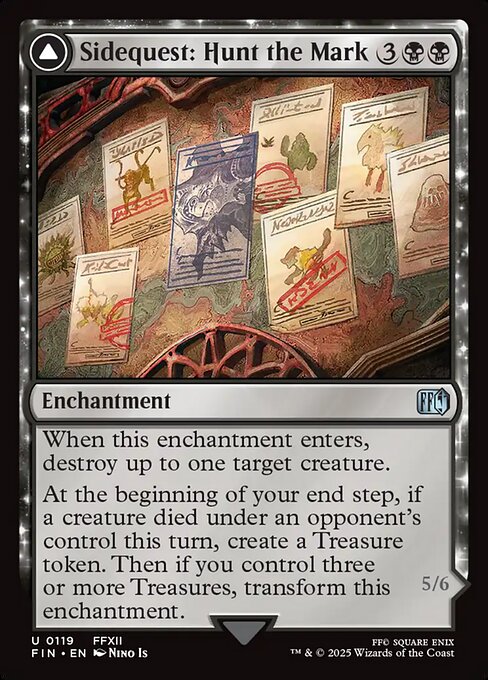
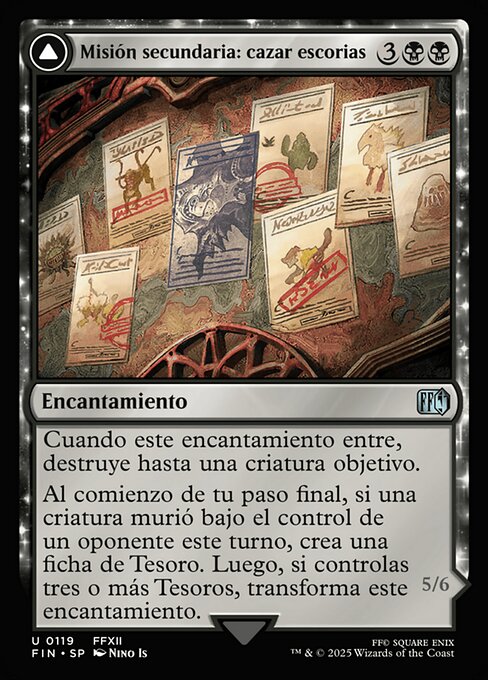
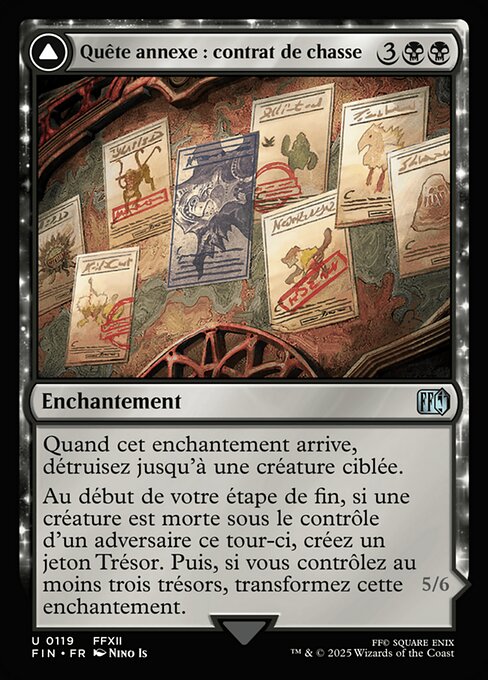
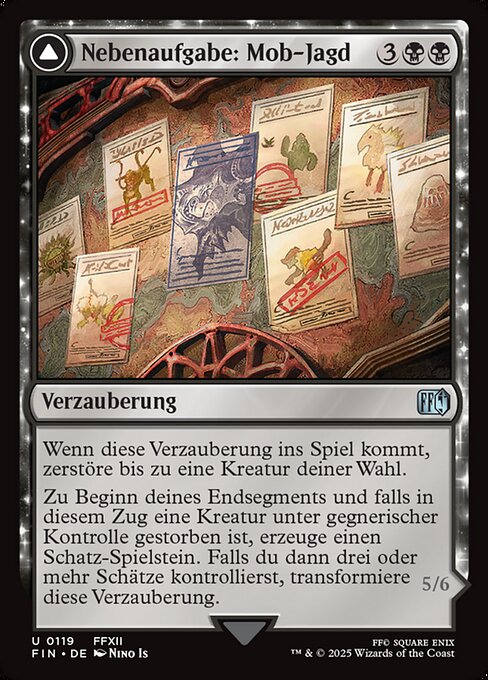
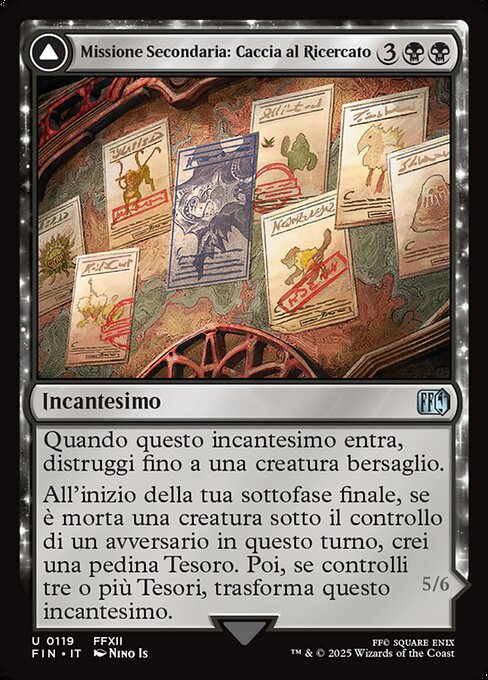
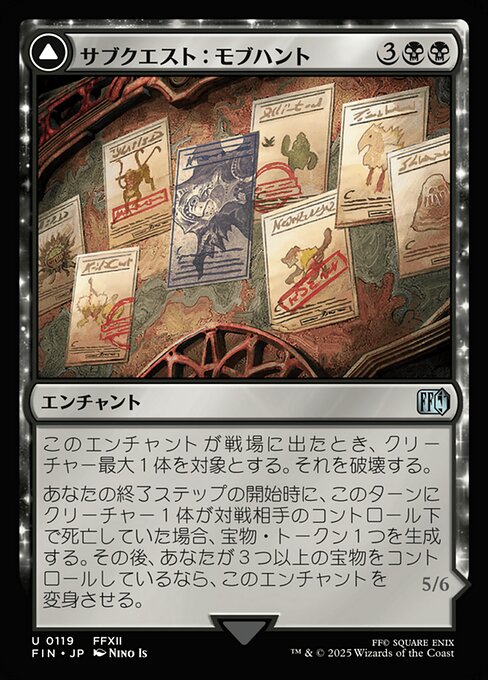 Variations : 1Parts : 2 | Sidequest: Hunt the Mark
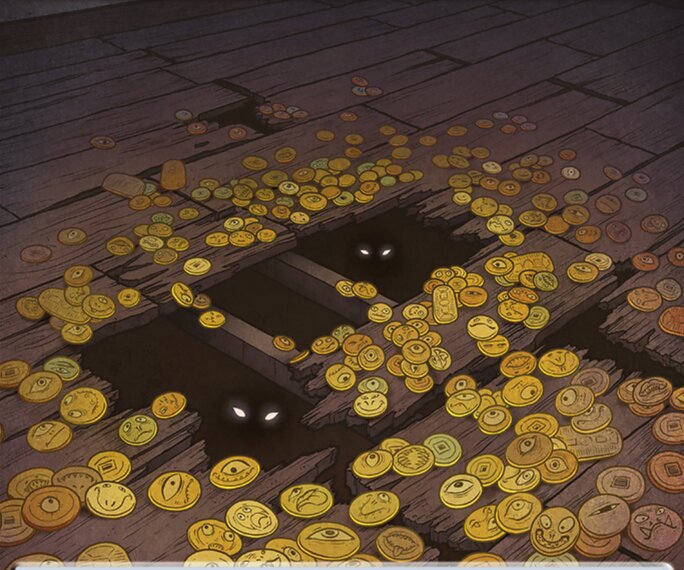
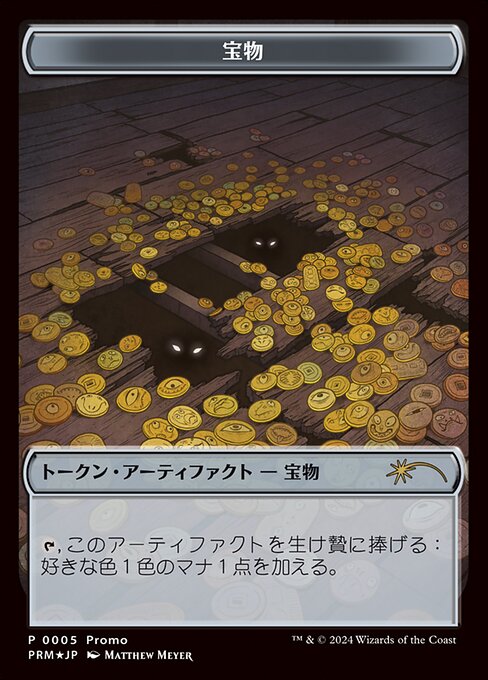
このエンチャントが戦場に出たとき、クリーチャー最大1体を対象とする。それを破壊する。 あなたの終了ステップの開始時に、このターンにクリーチャー1体が対戦相手のコントロール下で死亡していた場合、宝物・トークン1つを生成する。その後、あなたが3つ以上の宝物をコントロールしているなら、このエンチャントを変身させる。
Yiazmat, Ultimate Mark5 / 6   , クリーチャーやアーティファクトでありこれでない1つを生け贄に捧げる:ターン終了時まで、これは破壊不能を得る。これをタップする。 , クリーチャーやアーティファクトでありこれでない1つを生け贄に捧げる:ターン終了時まで、これは破壊不能を得る。これをタップする。
LegalitiesLegal Alchemy Brawl Commander Duel Future Gladiator Historic Legacy Modern Oathbreaker Pioneer Standard Standardbrawl Timeless Vintage Not Legal Oldschool Pauper Paupercommander Penny Predh Premodern RulingsIn the Commander variant, a double-faced card's color identity is determined by the mana costs and mana symbols in the rules text of both faces combined. If either face has a color indicator or basic land type, those are also considered. For example, Cecil, Dark Knight's color identity is black and white, since its front face is black and its back face has a white color indicator.
Sidequest: Hunt the Mark's last ability checks at the moment it would trigger to see if a creature died under an opponent's control this turn. If none did, the ability won't trigger at all. Once your end step begins, it's too late to cause creatures your opponents control to die in order to cause this ability to trigger.
The mana value of a nonmodal double-faced card is the mana value of its front face, no matter which face is up.
A token that is created as a copy of a double-faced permanent or a double-faced card in another zone is a double-faced token. It will have both the front face and back face of whatever object it's copying. If it's copying a double-faced permanent whose back face is up, the token will enter with its back face up. It can transform if instructed to do so.
Each face of a nonmodal double-faced card has its own set of characteristics: name, types, subtypes, abilities, and so on. While a nonmodal double-faced permanent is on the battlefield, consider only the characteristics of the face that's currently up. The other set of characteristics is ignored.
Each nonmodal double-faced card in this release is cast face up. In every zone other than the battlefield, consider only the characteristics of its front face. If it is on the battlefield, consider only the characteristics of the face that's up; the other face's characteristics are ignored.
The back face of a nonmodal double-faced card usually has a color indicator that defines its color.
If you are instructed to put a card that isn't a double-faced card onto the battlefield transformed, it will not enter at all. In that case, it stays in the zone it was previously in. For example, if a single-faced card is a copy of Crystal Fragments, it will be exiled during the resolution of its second ability and remain in exile.
A nonmodal double-faced card enters with its front face up by default, unless a spell or ability instructs you to put it onto the battlefield transformed or allows you to cast it transformed, in which case it enters with its back face up.
| Market Pricing
Printings
| |||||||||||||||||||||||||||||||||||||